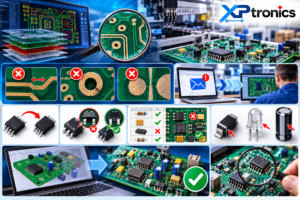
PCB assembly involves precision, attention to detail, and strict quality control. Even small issues during the assembly process can affect the performance and reliability of the finished product.
At Xptronics Inc., careful manufacturing and inspection procedures help identify potential problems early and ensure PCB assemblies meet the required quality standards.
Here are five common PCB assembly problems and ways to help prevent them.
1. Solder Bridges
A solder bridge occurs when solder unintentionally connects two adjacent pads or component leads. This can create an electrical short and cause the PCB to malfunction.
How to prevent it:
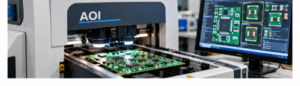
Accurate solder paste application, appropriate stencil design, correct component spacing, and controlled reflow soldering temperatures can significantly reduce the risk of solder bridges. Automated Optical Inspection (AOI) can also identify solder-related defects after assembly.
2. Tombstoning
Tombstoning occurs when one end of a small surface-mount component lifts away from the PCB during reflow, leaving the component standing on one end.
This problem can be caused by uneven heating, differences in solder paste volume, or incorrect pad design.
How to prevent it:
Proper PCB pad design, consistent solder paste application, accurate component placement, and a properly controlled reflow profile can help prevent tombstoning.
3. Component Misalignment
Components must be accurately positioned before soldering. Even slight misalignment can result in poor solder joints, electrical problems, or difficulties during subsequent assembly and testing.
How to prevent it:
Modern pick-and-place equipment, accurate PCB and component data, and regular equipment calibration help maintain precise component placement. AOI inspection provides an additional check to identify misplaced or incorrectly oriented components.
4. Insufficient or Excessive Solder
The correct amount of solder is essential for creating reliable electrical and mechanical connections. Too little solder can result in weak or incomplete joints, while excessive solder can cause bridging and other defects.
How to prevent it:
Proper stencil design, accurate solder paste application, and controlled reflow profiles are important for achieving consistent solder joints. Regular inspection during production can also help identify variations before they become larger problems.
5. Poor Component Placement or PCB Design
Some assembly problems begin before manufacturing even starts. Components that are positioned too close together, difficult-to-access areas, unsuitable footprints, or inadequate clearances can create manufacturing challenges.
How to prevent it:
Designing with manufacturability in mind can make the assembly process more reliable and cost-effective. Reviewing PCB layouts, component footprints, clearances, and assembly requirements before production can help prevent avoidable problems.
Quality Starts with the Assembly Process
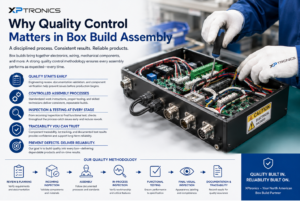
Preventing PCB assembly problems requires more than simply inspecting finished boards. Good results come from combining accurate design information, quality materials, precise equipment, experienced operators, and effective inspection procedures.
At Xptronics Inc., quality control is an important part of the PCB assembly process. From SMT placement through inspection, attention to detail helps ensure that every assembly meets the customer’s requirements.
Planning your next PCB assembly project? Contact Xptronics Inc. to discuss your prototype or production requirements and find out how our PCB assembly and inspection capabilities can support your project.