Power supplies are the unsung heroes of all electronic systems, providing stable voltage and current to keep circuits running. Two of the most common types are linear power supplies (LPS) and switch‑mode power supplies (SMPS)—and though they serve the same purpose, they work in very different ways.
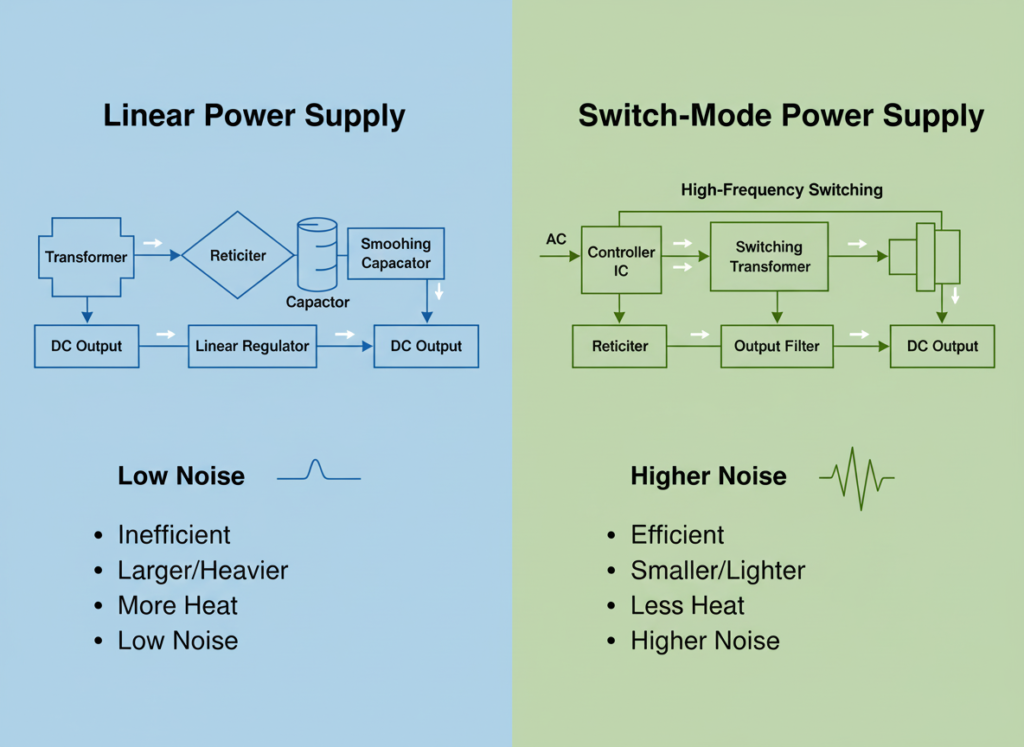
A linear power supply converts AC to DC using a transformer, rectifier, and linear regulator. It delivers clean, low‑noise output but is less efficient because excess energy is burned off as heat. These supplies are simple, reliable, and ideal for sensitive analog or audio circuits that demand minimal electrical noise.
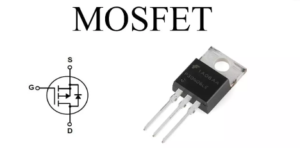
A switch‑mode power supply, by contrast, uses high‑frequency switching transistors to regulate voltage. This makes it much more efficient, lighter, and capable of handling a wider input range. However, it can generate more electrical noise—something that needs careful filtering when powering precision electronics.
In short:
- Linear PSU: Clean output, bulky, inefficient
- Switch‑Mode PSU: Efficient, compact, can produce electrical noise